
—— NEWS CENTER ——
How Does a Solar Street Light Work? Components, Benefits and Applications
Introduction
As the demand for sustainable infrastructure continues to grow, solar street lights have become a preferred outdoor lighting solution
for municipalities, contractors, developers, and commercial property owners. Unlike conventional street lights that depend on the electrical grid,
solar street lights generate and store their own energy, providing reliable illumination while significantly reducing operating costs.
But how does a solar street light actually work? Understanding the system’s operating principle helps buyers select the right product for
different environments and project requirements.
In this comprehensive guide, we’ll explain how a solar street light works, introduce its major components, highlight its benefits,
and explore the most common commercial and municipal applications.
What Is a Solar Street Light?
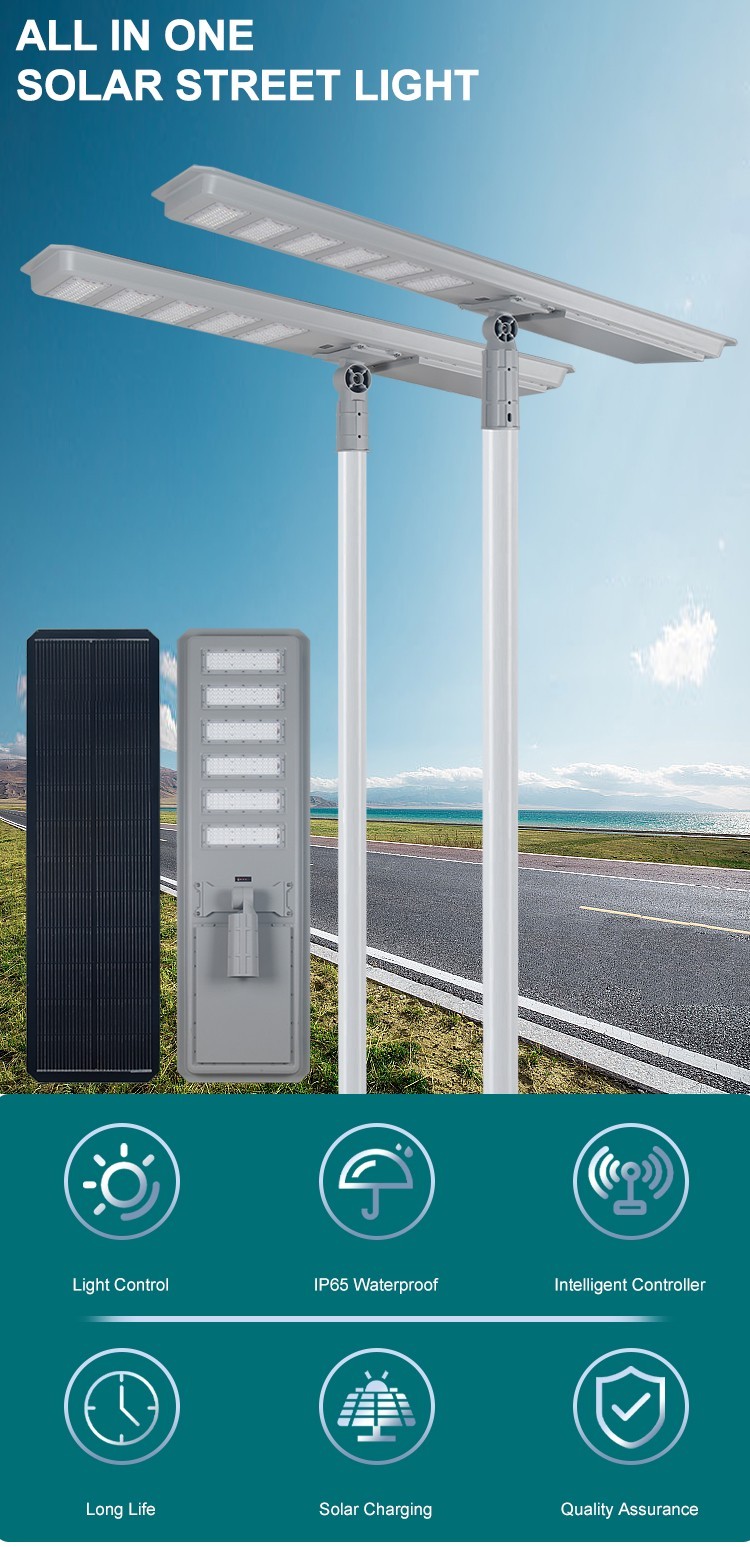
A solar street light is a self-powered outdoor lighting system that converts sunlight into electricity during the day and automatically provides lighting at night.
A complete system generally consists of:
Solar panel
LED light fixture
Rechargeable lithium battery
Intelligent solar charge controller
Lamp housing and mounting accessories
Because it operates independently of the utility grid, a solar street light is ideal for locations where traditional electrical infrastructure is unavailable, costly, or difficult to install.
How Does a Solar Street Light Work?
Although the technology behind solar lighting is advanced, its working process is straightforward and highly efficient.
Step 1: Solar Energy Collection
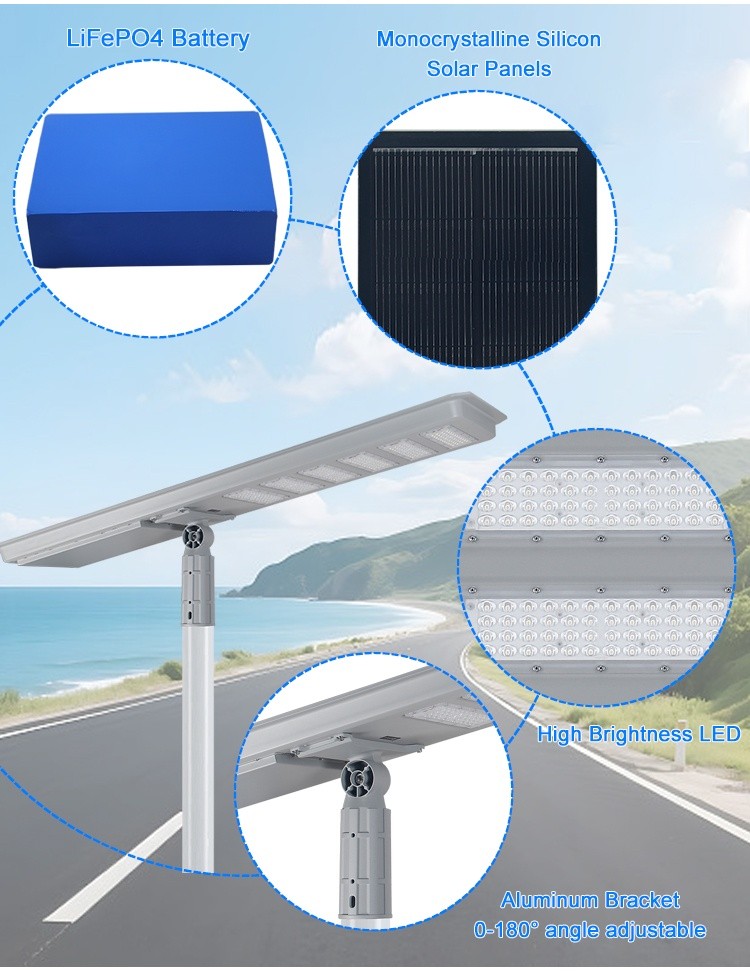
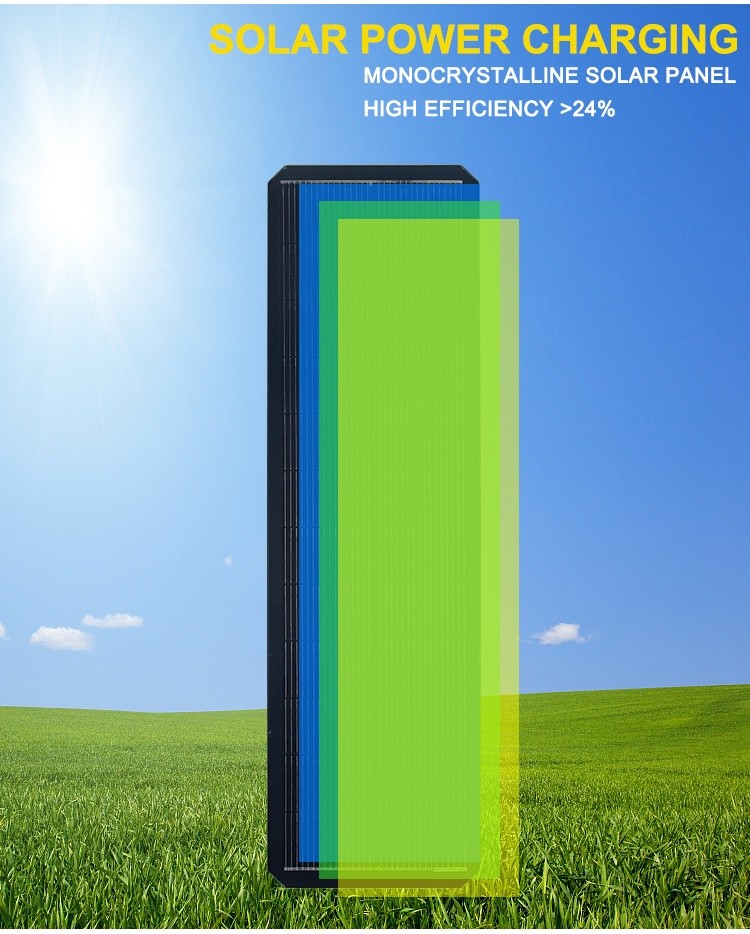
During daylight hours, the photovoltaic (PV) solar panel absorbs sunlight and converts solar radiation into direct current (DC) electricity.
High-efficiency monocrystalline solar panels maximize energy generation even under less-than-ideal weather conditions.
Step 2: Intelligent Battery Charging
The electricity generated by the solar panel is sent to the intelligent solar charge controller.
The controller regulates the charging process by:
Preventing overcharging
Preventing reverse current at night
Monitoring battery voltage
Optimizing charging efficiency
Protecting battery lifespan
The regulated electricity is stored safely in a LiFePO₄ (Lithium Iron Phosphate) battery for later use.
Step 3: Automatic Lighting at Night
As daylight fades, the controller detects the decrease in ambient light.
Without any manual operation, it automatically switches on the LED lamp.
The stored battery power is then supplied to the LED light source, providing stable illumination throughout the night.
Many commercial systems also support programmable lighting schedules and motion-sensing functions to improve energy efficiency.
Step 4: Sunrise Shutdown
At sunrise, the controller senses increasing light levels and automatically turns off the LED lamp.
The system immediately begins collecting solar energy again, repeating the cycle every day.
This fully automatic operation makes solar street lights virtually maintenance-free.
Main Components of a Solar Street Light
1. Solar Panel
The solar panel is responsible for converting sunlight into electrical energy.
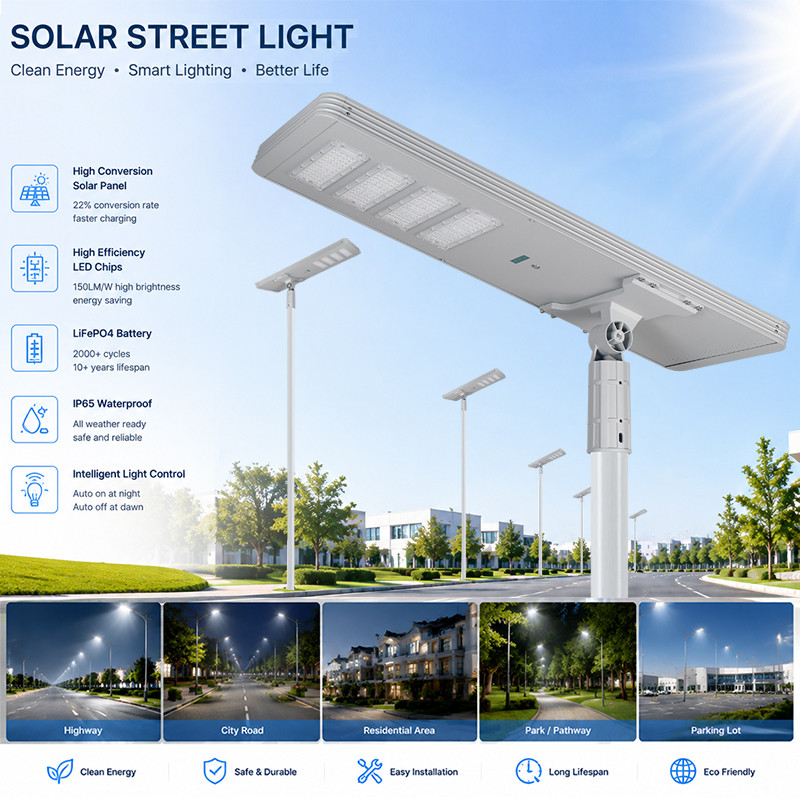
Most commercial solar street lights use monocrystalline silicon panels because they offer:
High conversion efficiency
Excellent low-light performance
Long service life
Stable output
Better charging performance throughout the year
The size of the solar panel directly influences the charging speed and overall system performance.
2. LED Light Source
The LED lamp converts electrical energy into high-efficiency illumination.
Compared with conventional lighting technologies, LEDs provide:
High brightness
Low power consumption
Long operating life
Minimal heat generation
Instant start-up
Excellent reliability
Modern commercial LED street lights often exceed 150 lumens per watt, making them highly energy efficient.
3. Lithium Battery
The battery stores energy collected during the day for nighttime operation.
LiFePO₄ batteries are widely used because they offer:
Long cycle life
High safety
Wide operating temperature range
Fast charging capability
Stable performance
Low maintenance requirements
Battery capacity determines how many hours—or even days—the system can operate without sunlight.
4. Intelligent Solar Charge Controller
The controller is the central management unit of the system.
Its functions include:
Battery charging management
Overcharge protection
Deep discharge protection
Short-circuit protection
Temperature compensation
Automatic dusk-to-dawn control
Motion sensor integration
Power output management
A high-quality controller greatly improves the lifespan and reliability of the entire lighting system.
5. Lamp Housing
The housing protects all internal components from harsh outdoor environments.
Commercial solar street lights commonly feature die-cast aluminum housings that provide:
Efficient heat dissipation
Corrosion resistance
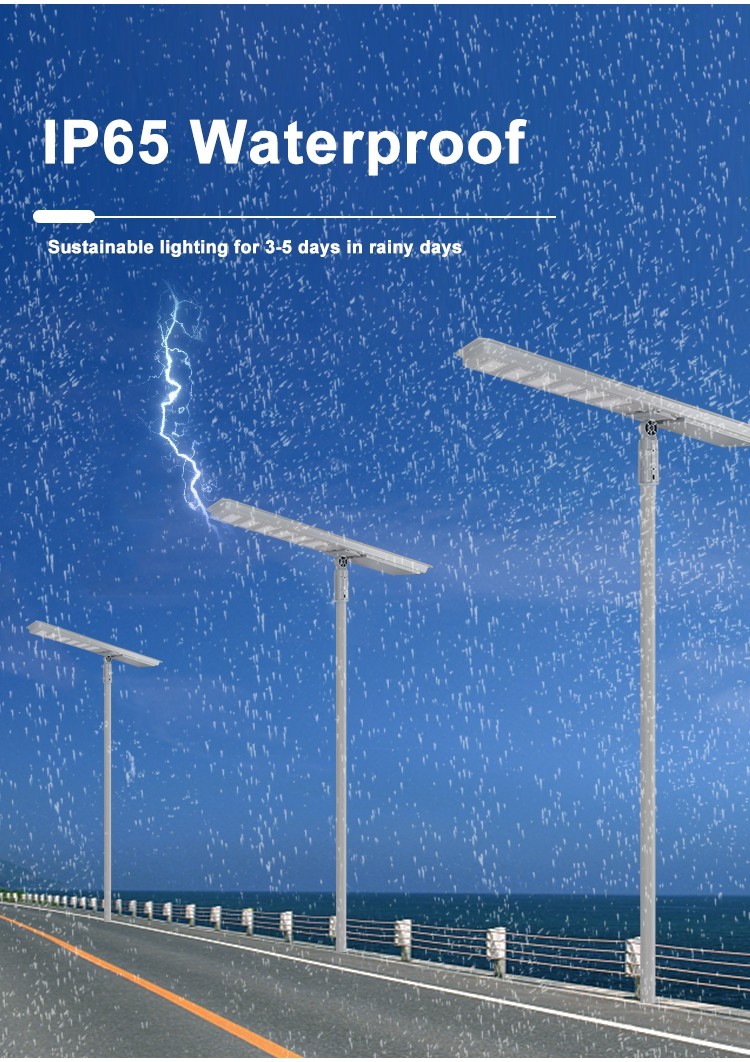
Waterproof performance (typically IP65 or higher)
High mechanical strength
Long-term durability
Types of Solar Street Lights
Different project requirements call for different system designs.
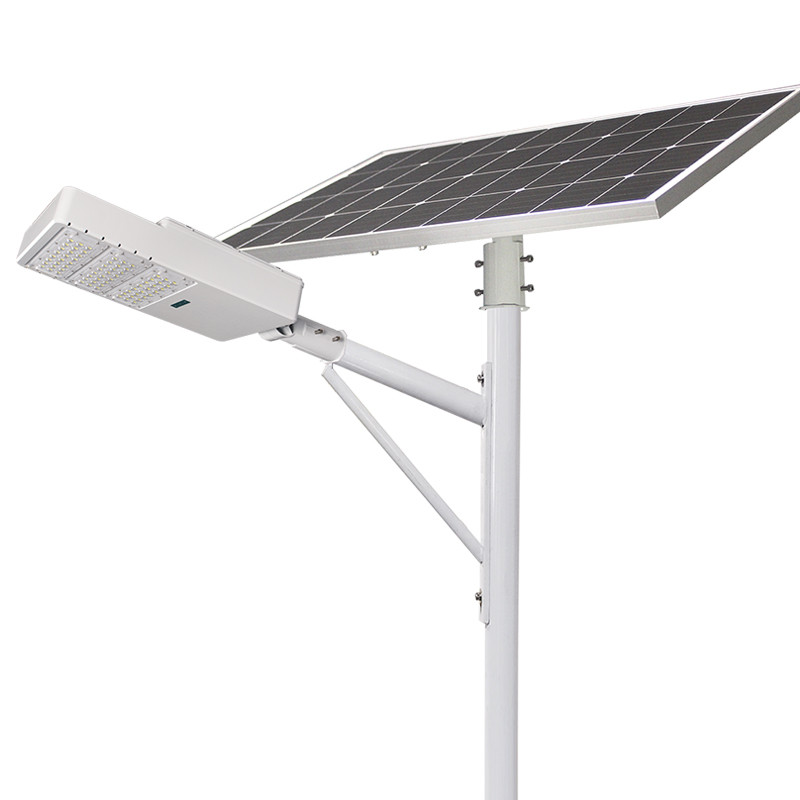
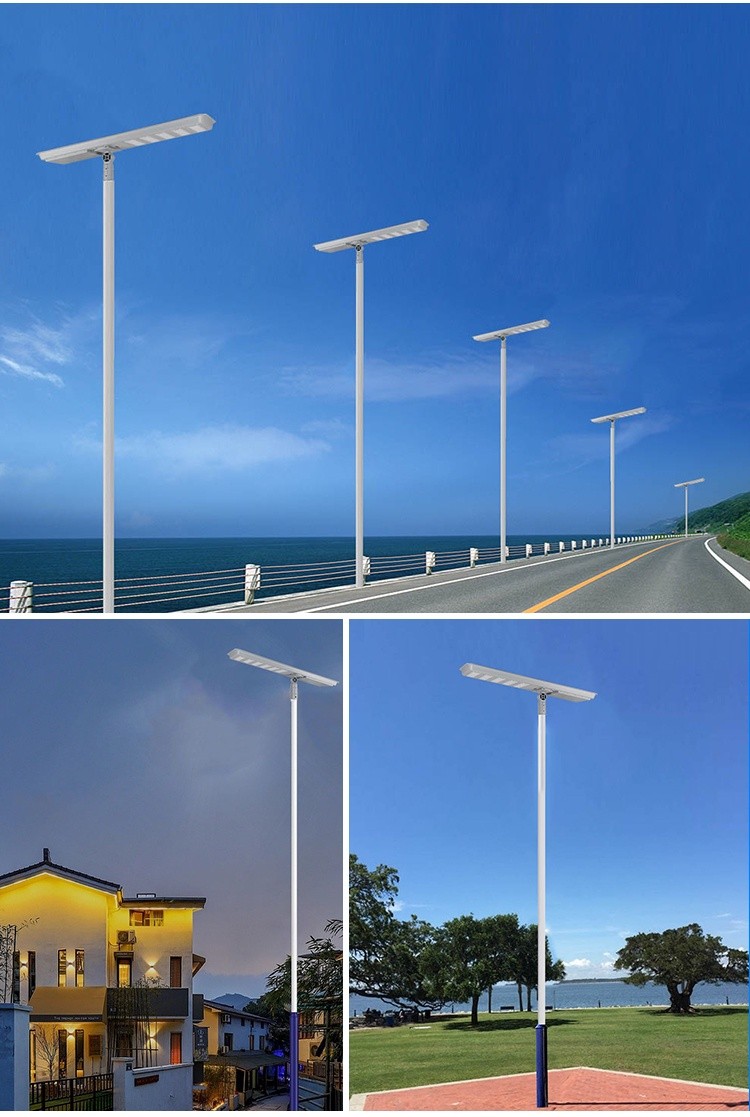
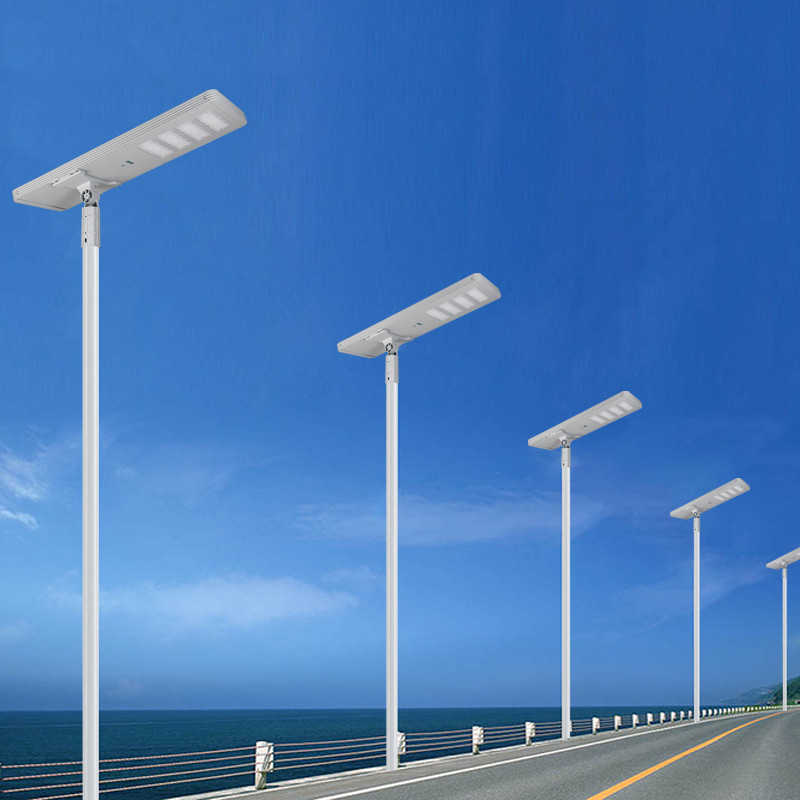
All in One Solar Street Light
This design integrates the solar panel, battery, controller, and LED lamp into a single compact unit.
Advantages include:
Simple installation
Modern appearance
Reduced labor costs
Easy maintenance
Ideal for residential streets, parks, pathways, and small commercial projects.
All in Two Solar Street Light
The LED fixture contains the battery and controller, while the solar panel is mounted separately.
Benefits include:
Larger solar panel options
Higher charging efficiency
Improved heat management
Greater installation flexibility
Suitable for municipal roads, parking lots, and industrial developments.
Split Solar Street Light
Each component is installed independently.
This configuration offers:
Maximum customization
High-power performance
Flexible system sizing
Better adaptability for large-scale infrastructure projects
It is commonly used for highways, airports, ports, and large municipal projects.
Benefits of Solar Street Lights
Zero Electricity Costs
Solar street lights rely entirely on renewable solar energy, eliminating ongoing electricity expenses.
Fast Installation
Because underground electrical wiring is unnecessary, installation is quicker and more cost-effective.
Environmentally Friendly
Solar lighting reduces carbon emissions and supports sustainable urban development.
Low Maintenance
High-quality LEDs and LiFePO₄ batteries significantly reduce maintenance requirements over the product’s lifetime.
Reliable Operation
Advanced battery management systems ensure consistent performance in various weather conditions.
Intelligent Energy Management
Optional motion sensors and programmable dimming schedules help maximize battery efficiency while maintaining lighting quality.
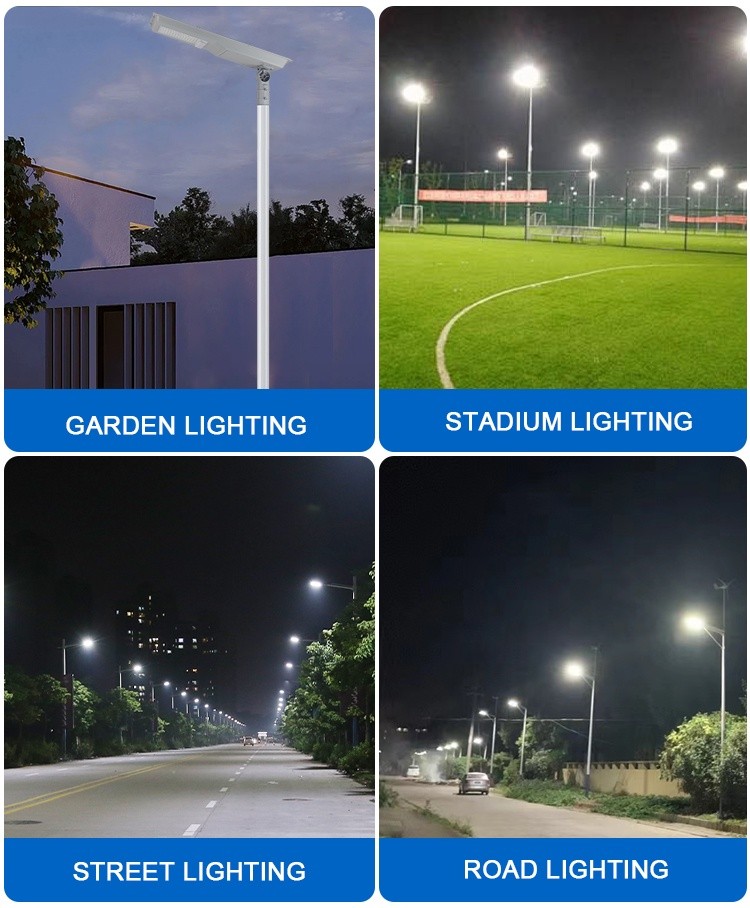
Commercial and Municipal Applications
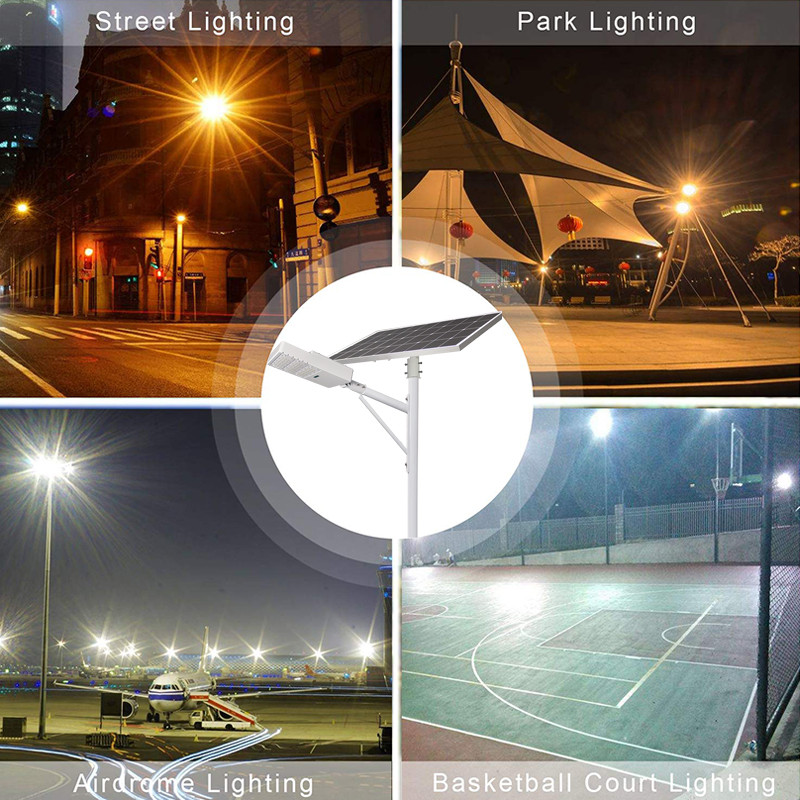
Solar street lights are widely installed in:
Municipal roads
Highways
Residential communities
Industrial parks
Parking lots
Public parks
Schools
Hospitals
Airports
Tourist attractions
Rural roads
Construction sites
Logistics centers
Ports
Resorts
Their versatility makes them suitable for both public infrastructure and private developments.
How to Choose the Right Solar Street Light
Before purchasing a commercial solar street light, consider the following factors:
Lighting Requirements
Evaluate road width, pole height, illumination standards, and operating hours.
Solar Resource
Understand the average daily sunshine hours at the installation site.
Battery Capacity
Ensure the battery provides sufficient backup during cloudy or rainy weather.
LED Efficiency
Higher luminous efficacy delivers better brightness while reducing power consumption.
Protection Rating
Choose products with at least IP65 waterproof protection for reliable outdoor performance.
Manufacturer Experience
An experienced manufacturer can provide customized solutions, technical support, quality assurance, and reliable after-sales service.
Why Choose Xiuben Lighting?
Xiuben Lighting specializes in manufacturing high-performance solar street lighting solutions for commercial, industrial, and municipal projects worldwide.
We provide:
OEM & ODM manufacturing
Customized lighting solutions
High-efficiency LED technology
Premium LiFePO₄ battery systems
Durable die-cast aluminum housings
Strict quality control
Competitive factory pricing
Fast global delivery
Professional technical support
Whether your project requires integrated solar street lights, all-in-two systems, or customized commercial lighting solutions, Xiuben Lighting is committed to delivering reliable products that meet international quality standards.
Frequently Asked Questions
1.Do solar street lights work during cloudy weather?
Yes. Properly designed systems store enough energy to continue operating for several nights without direct sunlight.
2.How long does a solar street light last?
A quality commercial solar street light can provide 8–15 years of service, depending on the quality of the components and maintenance.
3.Can solar street lights be customized?
Yes. Power output, battery capacity, solar panel size, lighting modes, mounting height, branding, and packaging can all be customized for OEM and ODM projects.
4.Are solar street lights suitable for highways?
Yes. High-power split and all-in-two solar street light systems are commonly used for highways, expressways, and major infrastructure projects.
5.What maintenance is required?
Routine maintenance mainly includes cleaning the solar panel, checking the battery condition, and inspecting mounting hardware to ensure optimal performance.
Conclusion
Solar street lights provide an intelligent, energy-efficient, and environmentally responsible solution for modern outdoor lighting.
By converting sunlight into electricity, storing energy in advanced lithium batteries, and automatically controlling illumination,
these systems offer dependable performance with minimal operating costs.
Understanding how a solar street light works—and how each component contributes to overall efficiency—helps project
owners choose the most suitable lighting solution for municipal, commercial, and industrial applications.
If you are looking for a reliable solar street light manufacturer that offers OEM, ODM, and customized solutions,
Xiuben Lighting is ready to help you deliver durable, high-performance lighting systems for projects around the world.
Recent Articles
Get Instant Quotes